

What I Really Wanted to do While In Paris (and almost didn't get to).
Or, How Monet's Water Lilies is getting me through this year.

I have been thinking about this last (probably last) post about our trip to Paris since before we were in Paris. Sometimes the things you think about the most are the things you are least sure what to say about. Weird, right?
We made a purposeful plan not to book tours ahead of time. Which, because we were going during the off season, we knew was a safe bet for most things. And, because we didn’t have any specific must do expectations we decided that if it meant we couldn’t do something we were OK with it.
When we were in Ireland we ended up not being able to do the Guinness tour which we have heard from many people is fabulous. However, they had a little bar at the back to try different samples and that sounded like enough. We ended up sitting next to an American college student studying abroad in Greece who had come to Ireland for St Patrick’s day with friends1 and like us did not get tickets ahead of time. We started talking and had a great time together while his friends were on the tour. Something that started out as a disappointment for all of us became a highlight.
A couple days later we were in Paris walking up to the Musee L’Orangerie before lunch ready to start a day of tourist activities with the thing I most wanted to do. The L’Orangerie houses Monet’s Water Lilies and I REALLY wanted to see them. I don’t think I realized how much it was the focus of what I wanted to do in Paris until we were standing outside the museum on Sunday being told that tickets were sold out until Wednesday (we were going home Tuesday). My heart was sinking as I was telling myself it was OK and not meant to be and God would bring us something surprising that was just what we should do that day instead. Deep breath.
The L’orangerie is a small museum which can be seen in 2 hours or less so we had planned to also go to the Musee D’Orsey as well which is how my mind was reframing our next step. “It’s fine, still get to see great art, still in Paris.” They are very near each other and so I was just standing silently processing before we walked across the bridge to our next destination when the guide who crushed my dreams says, “If you go to the D’orsey you can buy a combo ticket for both museums and get in today.” Ummm….Lead with that next time!!!
So we headed to the D’Orsey for our first museum of the day enjoying it thoroughly as we saw works of art we never imagined seeing in person. One was titled “Water Lilies” by Monet and John was like, oh, here it is. I just smiled and said, no that is not the one. Monet actually did 250-300 paintings of water lilies at the end of his life so if you want to see one closer to home MoMA in New York and The Art Institute of Chicago both have something as well. But they are not the one.2
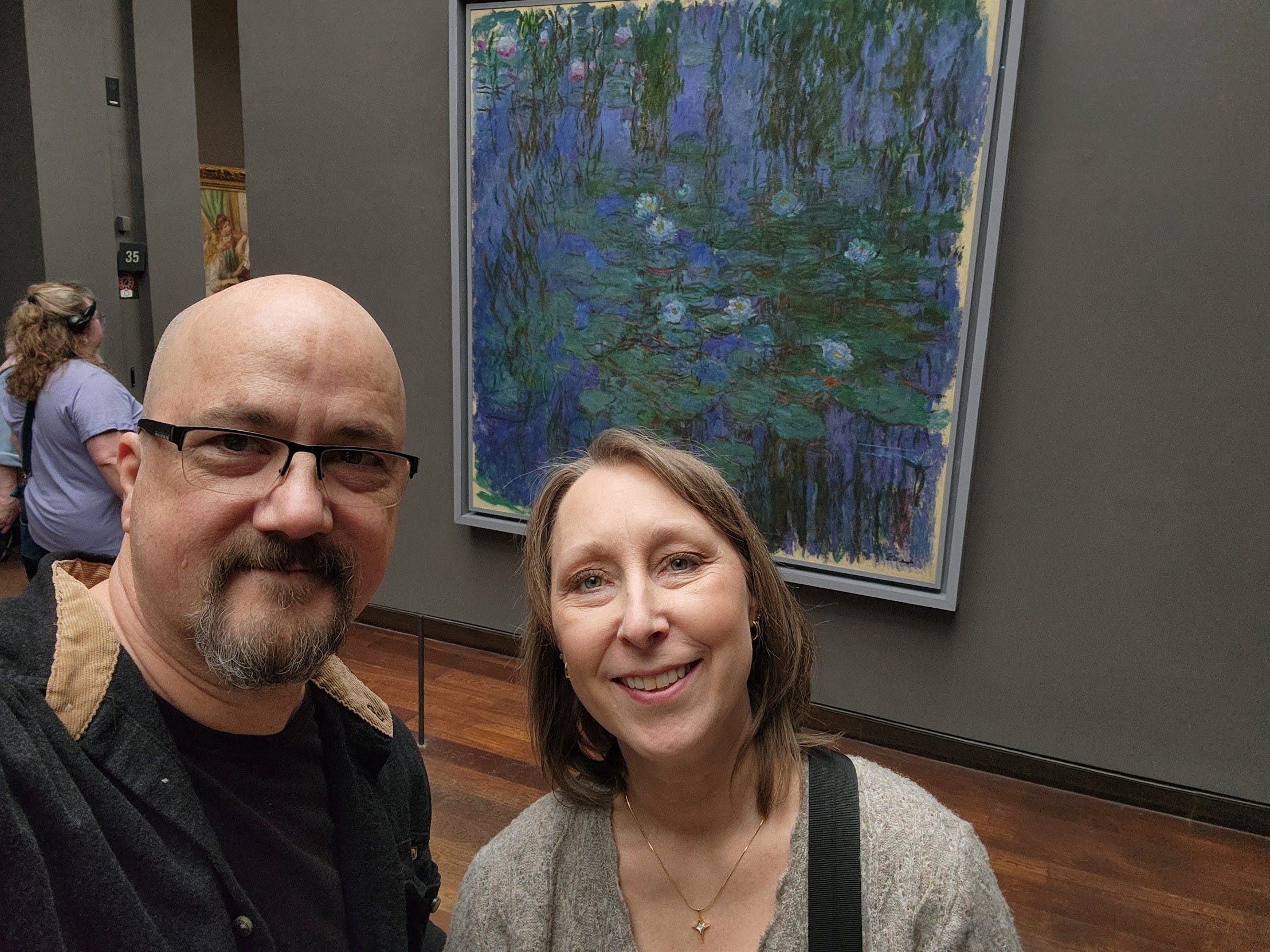
Once I realized John had not looked it up and did not know what I was taking him to I became even more excited to experience the surprise of the scale with him.
This is it:
Monet’s famous Water Lilies Cycle or Nympheas cycle is comprised of 8 large panels. They are set in 2 oval rooms designed by Monet to create an immersive experience. You walk into the room in silence the way Monet requested the works be viewed. There is literally someone who stands and shushes people if too much talking starts. It takes your breath away.
Although I sort of knew what I was going to see I did not know there would be 2 rooms. Double the amazing. It was a fun surprise to go around a corner into a second immersive room. We spent a fair amount of time in there, wandered the rest of the small museum and then decided to go back a second time before we left. The first time is for pictures and taking it all in. The second time is for processing.
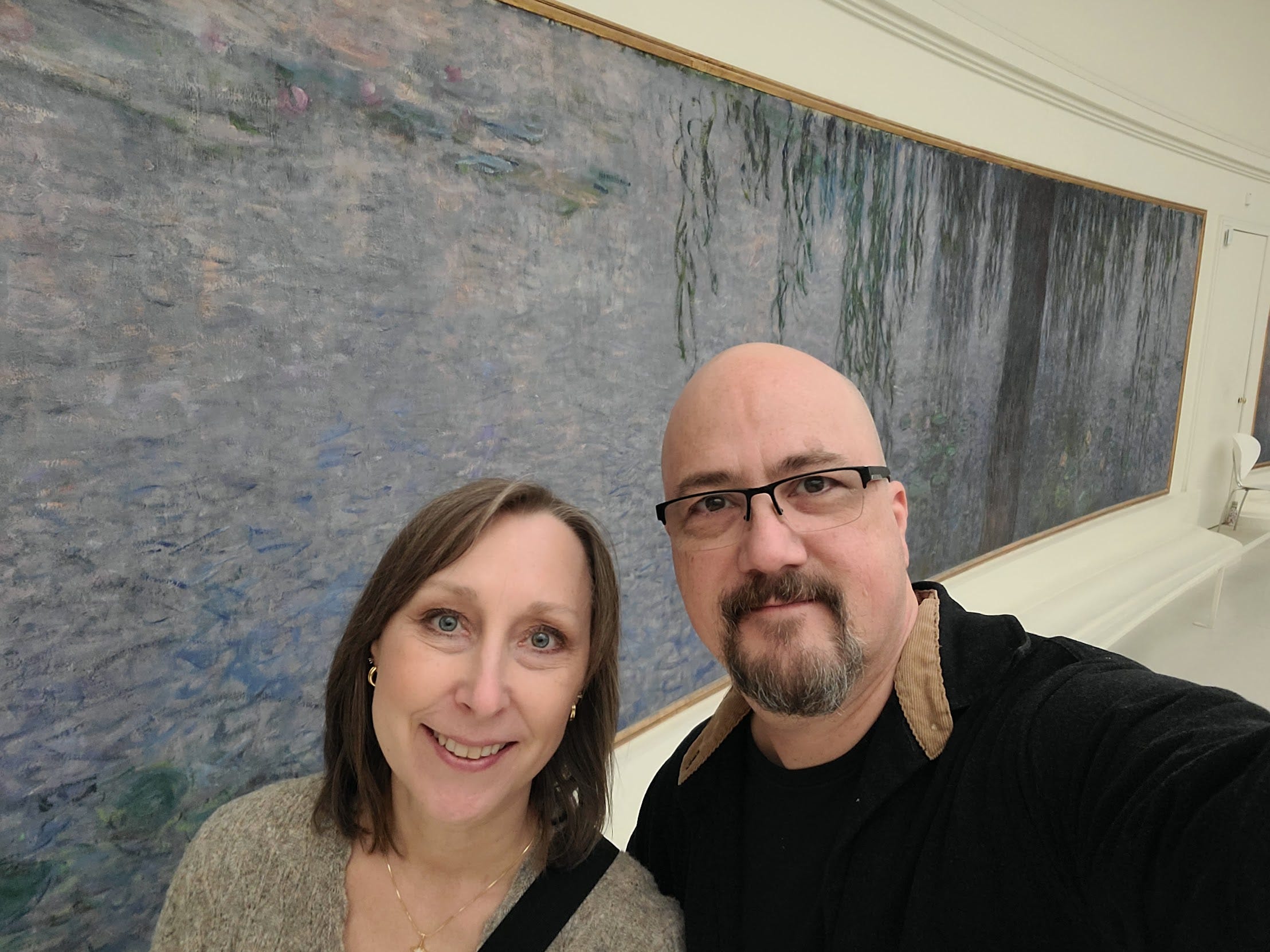
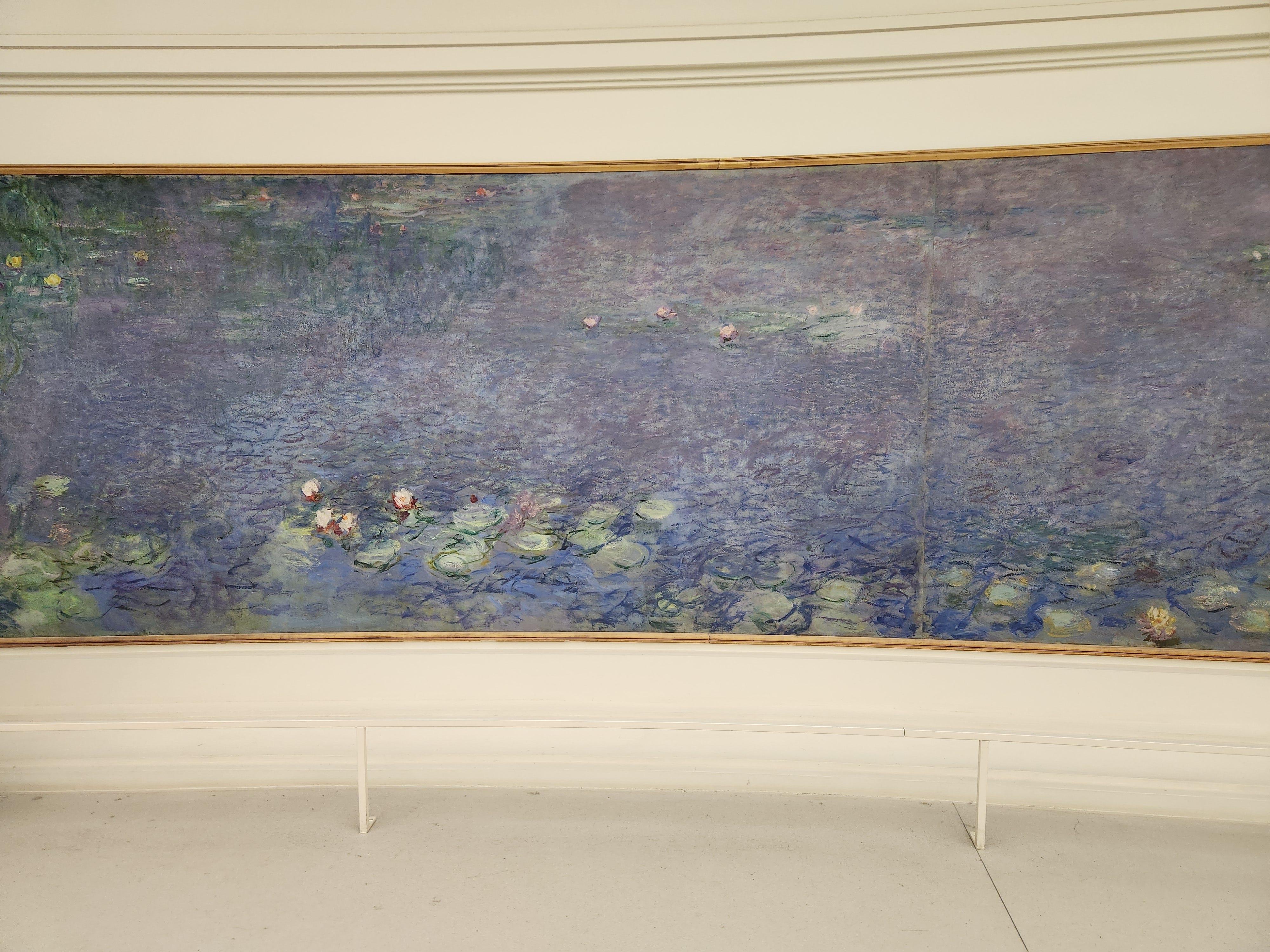
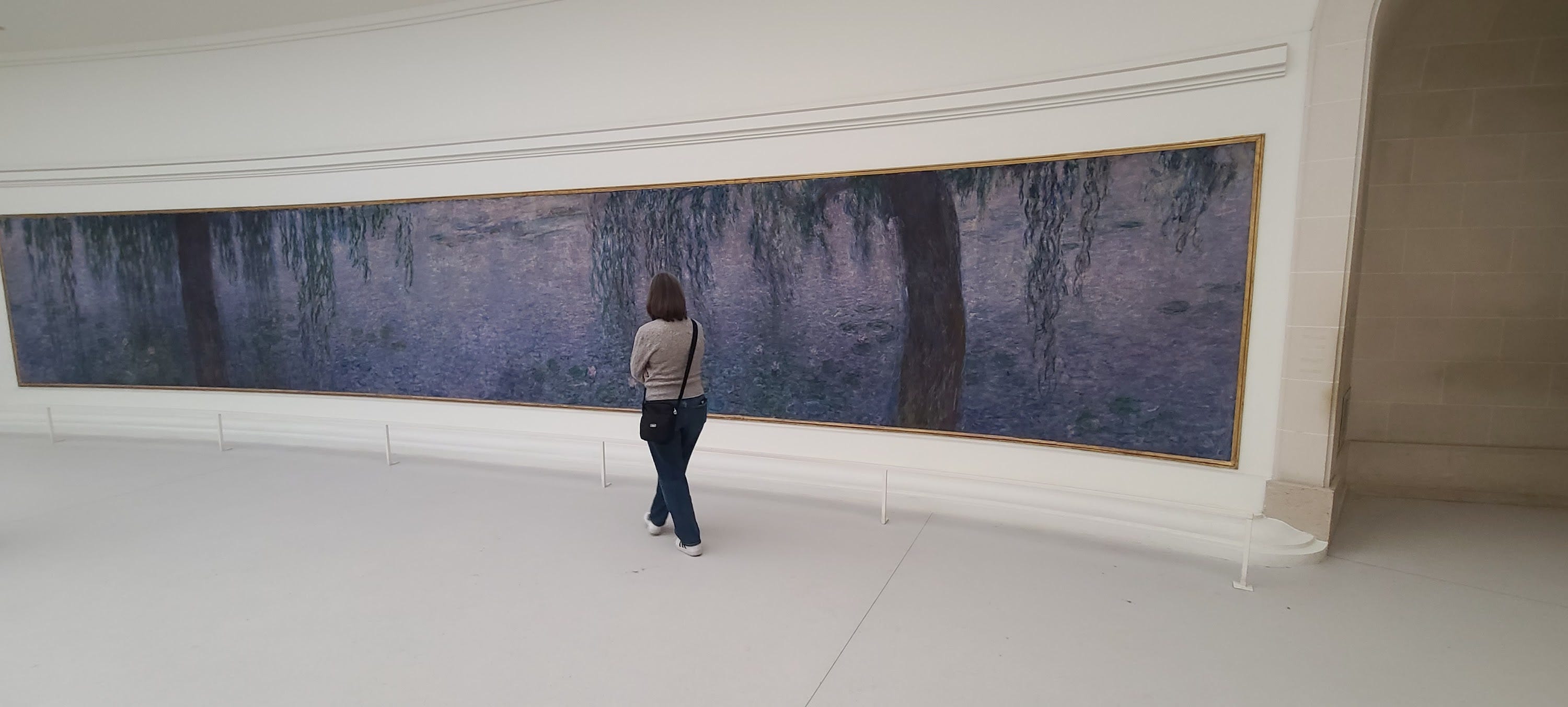
When we booked this trip the first week of January, I had no idea Monet’s Water Lilies were more than just one painting. I honestly had never given any thought at all to them. If asked I would have told you it was the painting of a bridge over a pond which my sister had a poster of in her college apartment. I too would have assumed I was looking for a simple painting similar to the one John saw.
But in January as I was struggling to know how to focus on my work which seemed a trivial distraction to the greater story going on in the world and in my neighborhood, I read about Monet who painted his great masterpiece during World War One while people were fighting nearby and he could literally hear and feel artillery shells going off at his home. He felt the torn emotions of the moment as friends and family, as well as himself, were in danger, as his country was at war, while he painted his garden. Was there any point? What value was this in the midst of so many other needs and sorrow?
In 1914 he wrote in a letter, “Yesterday I resumed work. It’s the best way to avoid thinking of these sad times. All the same, I feel ashamed to think about my little researches into form and colour while so many people are suffering and dying for us.”
Yes, I felt that a lot in January.
When I discovered his pieces were hanging in Paris I knew I wanted to see them3.
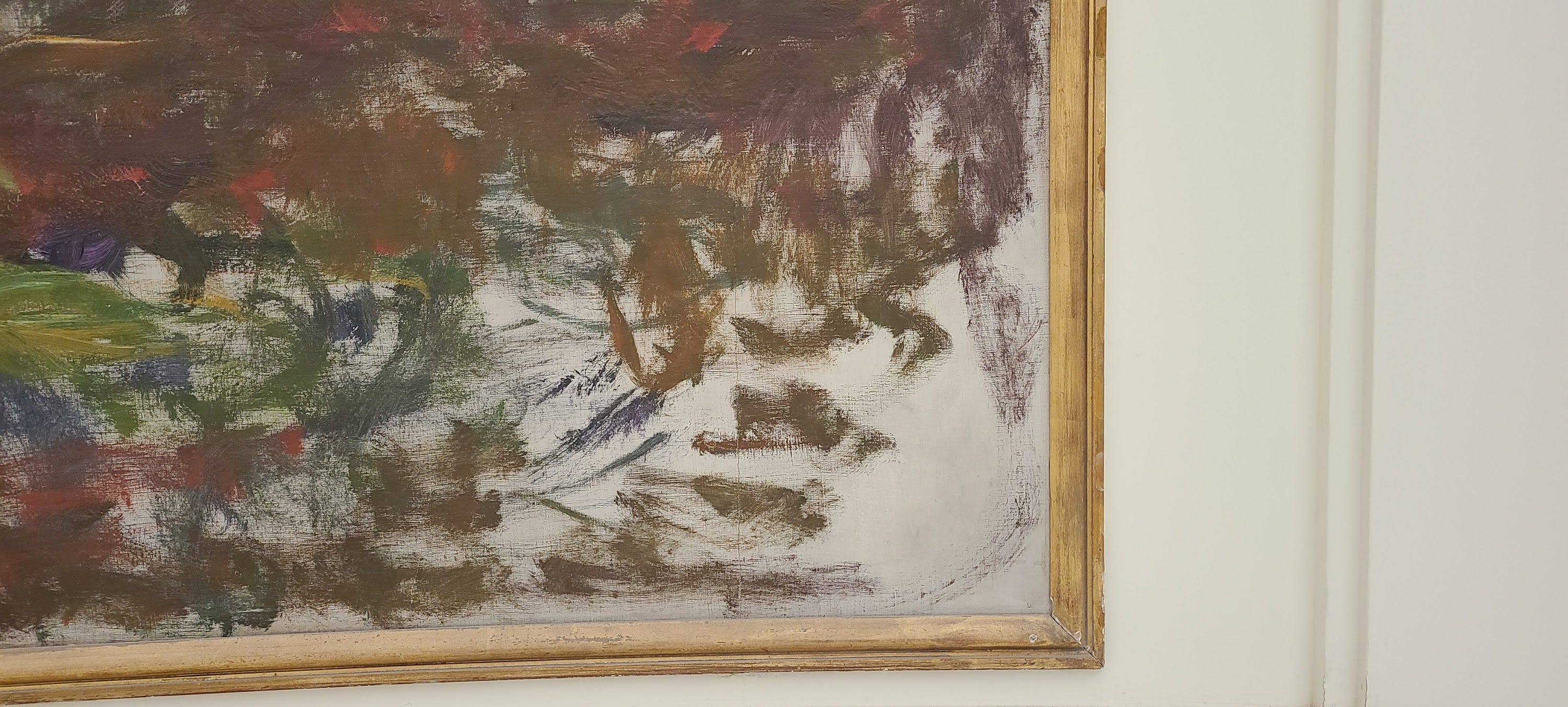
As I wandered the room taking in the scale, the colors, the patterns and textures, I thought about that inner turmoil that he worked through. While I spent several days staring at my phone or the walls in January, he found a way to keep working rather than curl up in a ball or run away to find something more “important” or “significant” to do. I wondered if there were spots that represented days he was sort of phoning it in4. Where he just showed up and plopped some water lilies on the canvas because it was the next thing on his plan rather than because he had any vision for it. I wondered if there were days that started out a chore but he got caught up in the inspiration of the colors and shapes he was creating and found himself full of energy for the task. I wondered if there were days he left the studio early. I wondered if underneath the layers of paint there were half hearted attempts that got covered up the next day. I didn’t see one continuous line of inspiration and perfection, I saw years of ups and downs, questions and doubts, fear, anxiety. But also hope, perseverance, inspiration, getting lost in the details, being inspired by the beauty, the forms, the colors and the joy of creating something that represents the life cycle of water lilies in his garden and peace in France.5
As I think about my life and my work I want to be reminded on the days that feel mundane, or pointless, when the world feels like it is crumbling around me, that those days are part of the cycle of my life, my garden, my story. Along with the days of joy and energy and passion for my life, my work, my family and friends.
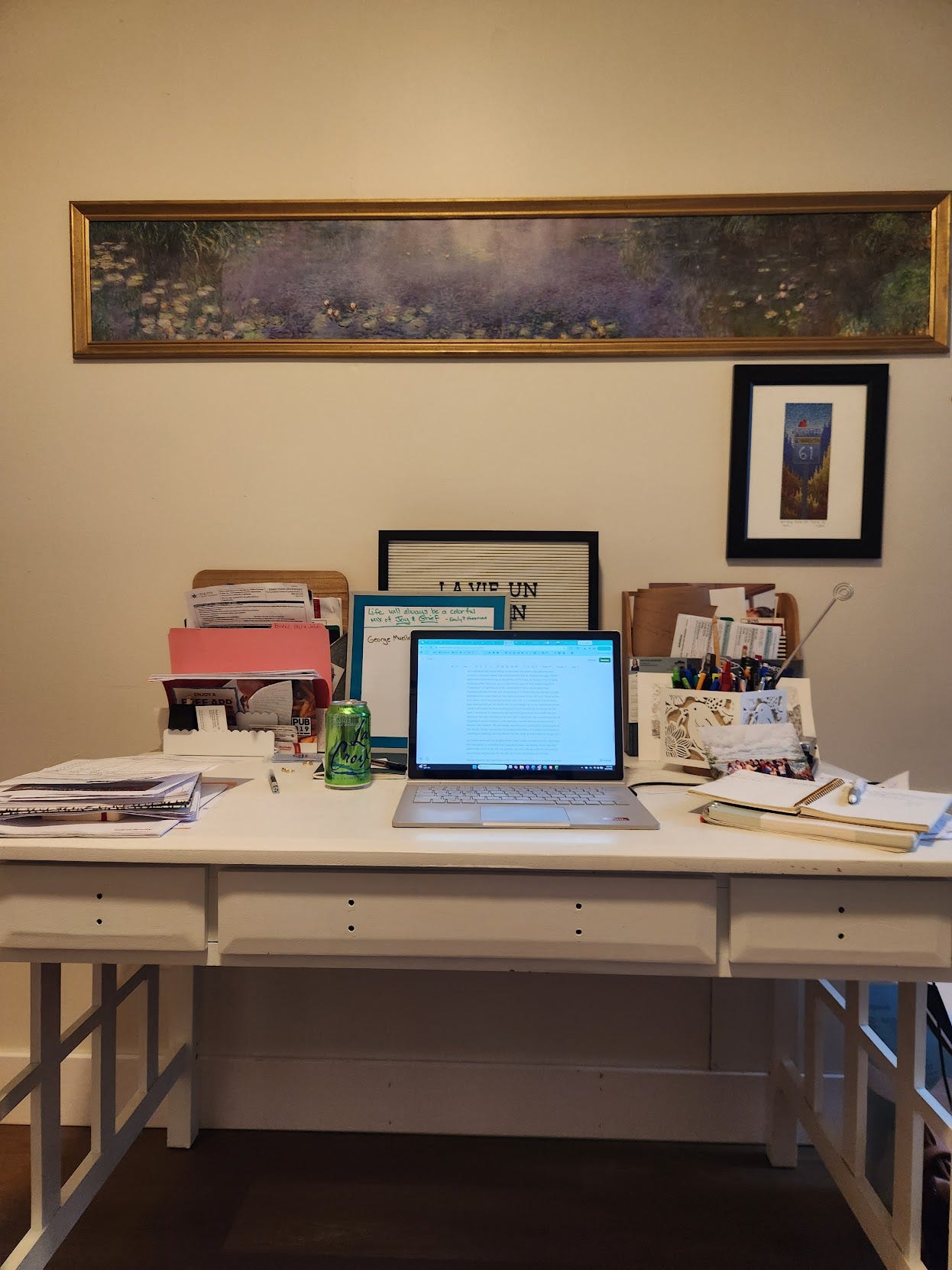
When we were there I bought a poster of one of the panels for my home office. We bought some trim pieces, painted them gold, and John nailed this frame to the wall around the poster. A little reminder as I go about my days that whether it is a day of confidence or doubt, enthusiasm or sorrow, confidence or fear, all of it is going into creating my master piece, this life that God has given me.
PS:
When researching, I use that term loosely for what I did here, I came across a couple substack articles that cover Water Lilies and give a little more history than I was interested in relaying. Check them out:
The first one talks about visiting those smaller paintings he did at another museum I didn’t even know about in Paris but now wish I had also visited. (guess I’ll have to go back). The impact was similar for her.

This one gives a little more history of Monet in general and this season of his life in particular. A quick and interesting read if you are like me and like history but don’t have time to get lost in the weeds.

note, the off season does not include the weekend of St Patrick’s day when you are in Ireland.
The D’Orsey also had a painting by Van Gogh titled, “Stary Night” which was not THE Stary Night. So apparently they all did several versions of the same thing and gave them all the same title. And we call them creative.
I am not an art critic or expert in art in any way. But from what I have gathered talking to my may arty friends, part of what it is about is what you experience with it. No right or wrong answers. So whether what I share of my experience is true or not, apparently it is the right experience for me to have. This is a footnote I am sharing to myself as I announce to the world what I was thinking in front of more artsy people than me.
What was the “phoning it in” phrase in Monet’s day. Did he half ass something? Now I need to know what the late 19th and early 20th century versions of half assing is. I am sure it is something fabulously poetic sounding to my 21st century ears.
He donated the piece to France on Armitage day after the war to symbolize peace to the country.